CampaignOS- Creator Campaign Execution System
An end-to-end campaign execution system — from goal-setting and creator assignment through deliverable tracking,
content review, and final delivery. Designed as a connected workflow, not a collection of tools.
Problem
Campaign workflows are spread across tools, making it hard to:
- Align goals with execution
- Track creator deliverables
- Manage reviews and approvals
Insight
The issue isn't just task tracking, it's the lack of a connected workflow across campaign phrases.
Campaigns require a system that links:
- Setup decisions
- Creator output
- Review processes
- Delivery timelines
The Four Phase Worflow
1.
Campaign Setup
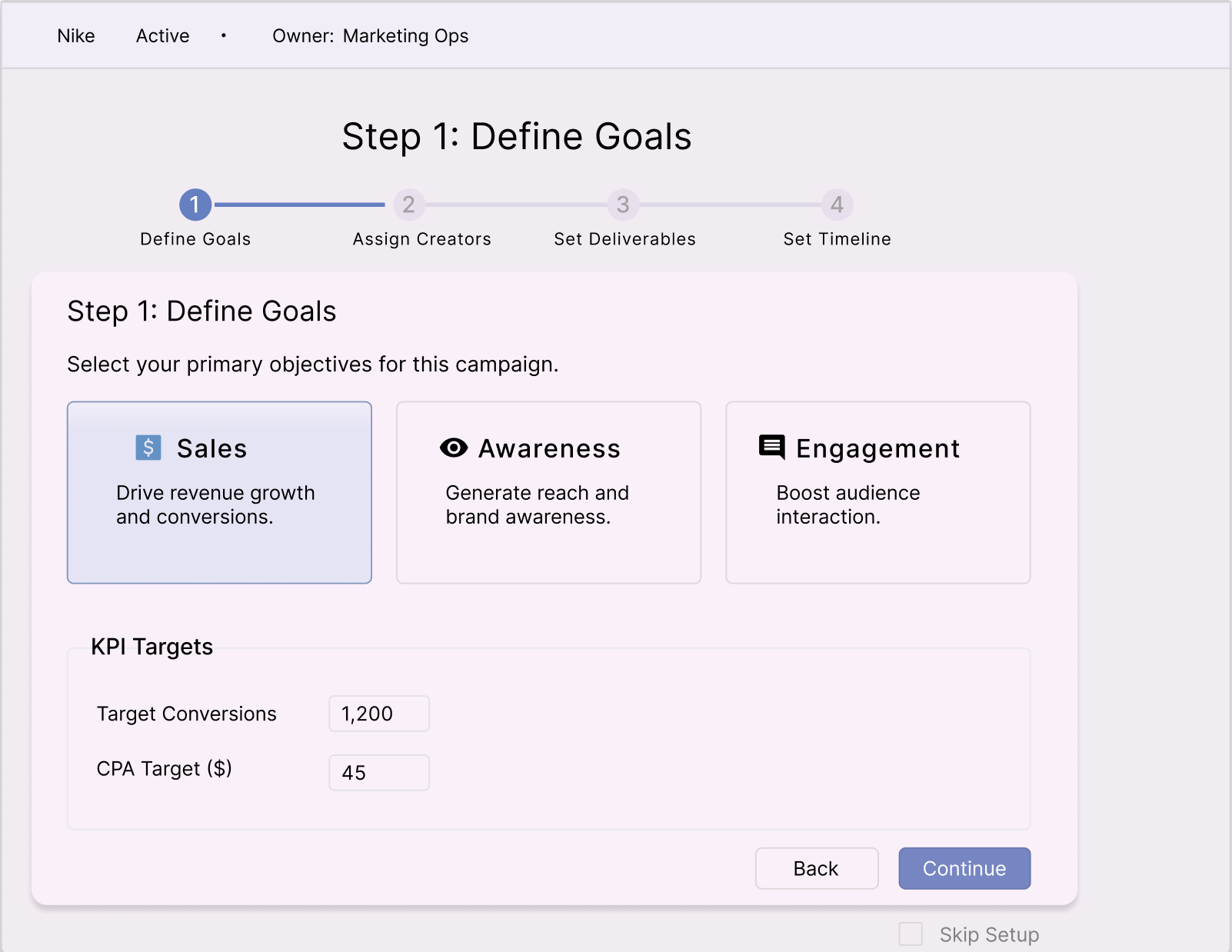
Define goals, set KPI targets, assign owners, establish timeline checkpoints
2.
Deliverables Builder
Assign content to creators, set due dates, track status across the full deliverable list
3.
Submission Review
Review submitted content against a brief checklist, leave threaded comments, request revisions or approve
4.
Progress Tracking
KPI performance vs. targets, budget status, completion rate, and overdue flags in a single view
The hardest part of campaigns isn't creating content, it's keeping everything aligned from start
to finish.
What The System Does
Goal-linked KPI tracking
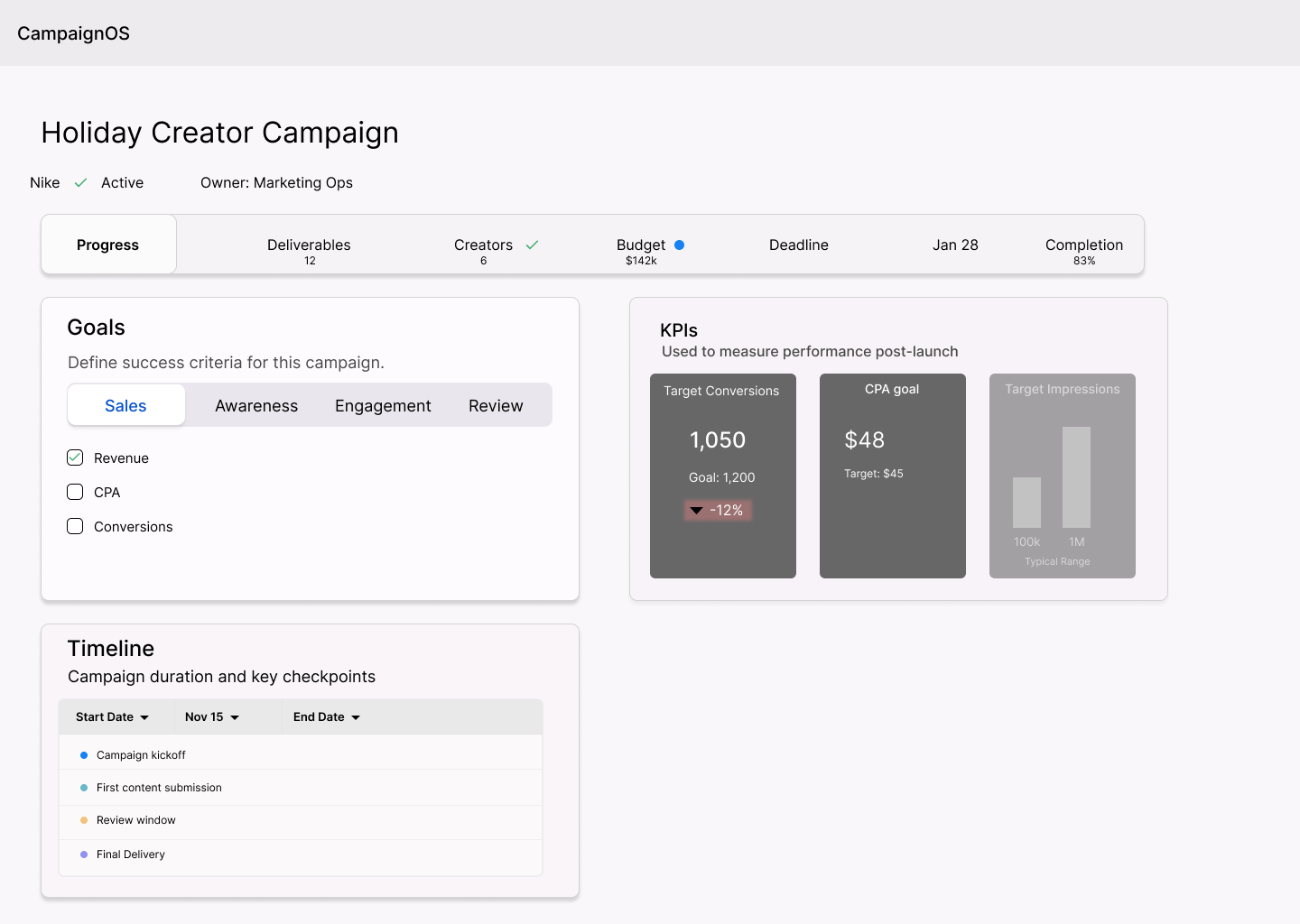
Goals (Sales, Awareness, Engagement) connect directly to KPI targets — conversions, CPA, impressions. Performance is tracked against those targets with variance indicators.
Deliverable status matrix
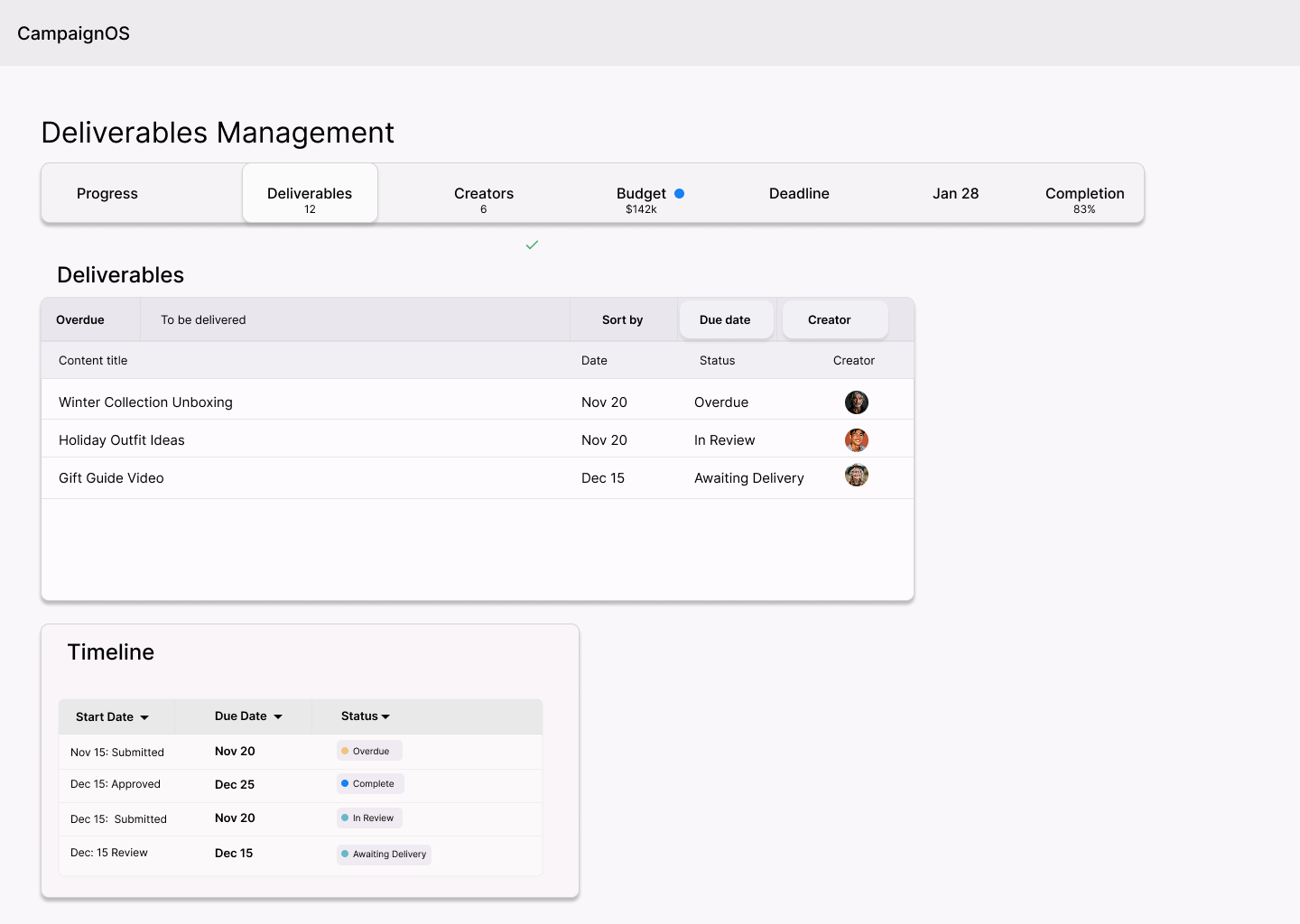
Every deliverable has a creator, due date, and status — Overdue, In Review, Awaiting Delivery, Complete. Sortable by date or creator. Overdue items surface automatically.
Brief-driven content review
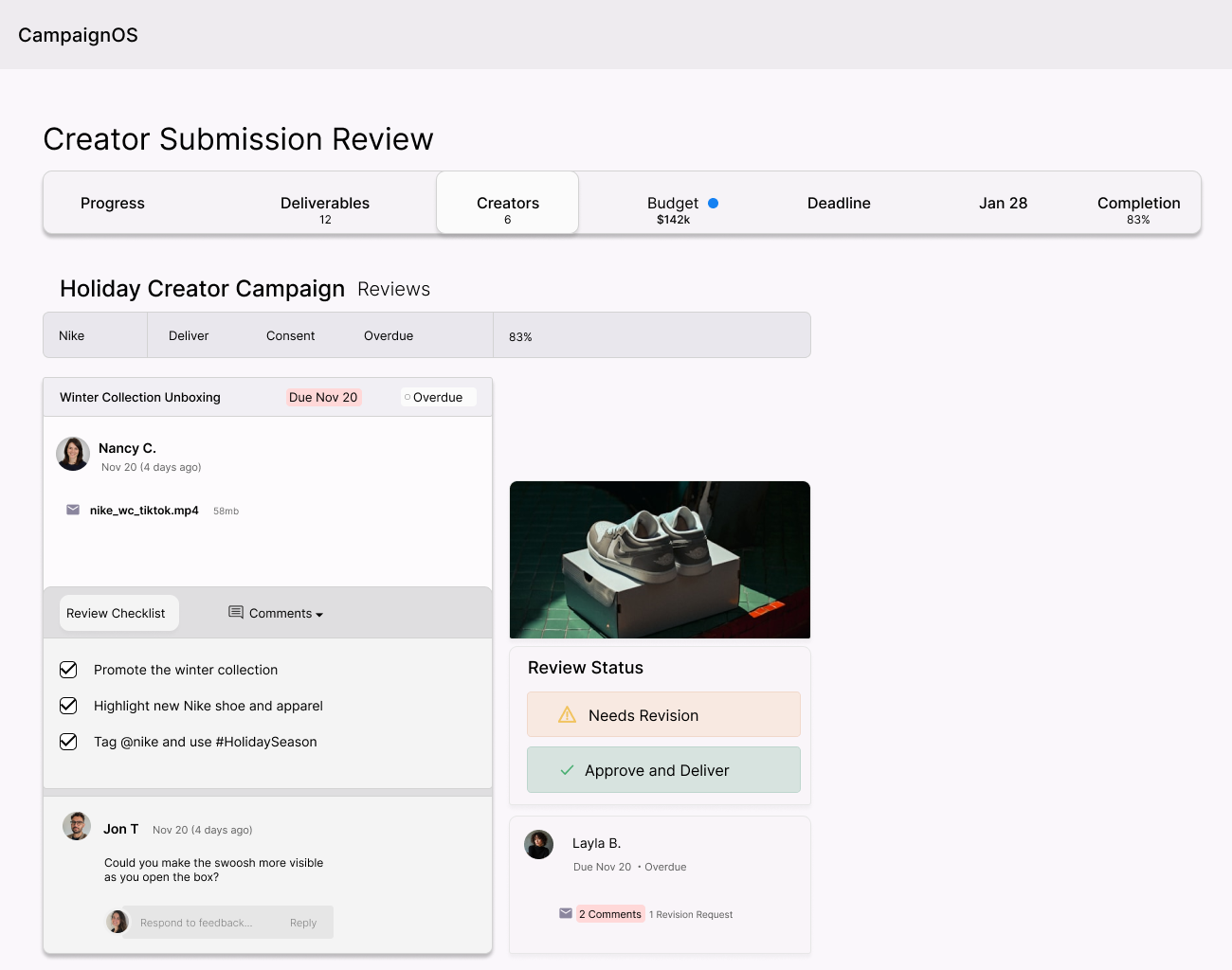
Submitted content is reviewed against a campaign brief checklist. Reviewers leave threaded comments per submission and set status — Needs Revision or Approve and Deliver.
Persistent progress header
Deliverable count, creator count, budget, deadline, and completion % follow the user across every phase — no navigating away to check campaign health.
Guided setup flow
Four-step wizard (Define Goals → Assign Creators → Set Deliverables → Set Timeline) ensures campaigns are fully configured before execution begins.
Timeline with phase checkpoints
Campaign kickoff, first submission, review window, and final delivery mapped to a timeline. Phase status visible alongside deliverable-level dates.
Campaign Overview
Purpose
Provide a centralized view of campaign goals, performance targets, and execution timeline.
Impact
Aligns strategy with execution and ensures all stakeholders operate from a shared source of truth.
Core Flows
Purpose
Define Campaign goals, assign creators, and establish deliverables.
Impact
Ensures alignment between business objectives and execution before production begins.
Purpose
Track all deliverables across creators, deadlines, and statuses.
Impact
Provides real-time visibility into campaign execution and prevents missed deadlines.
Purpose
Review content submitted, provide feedback, and approve deliverables.
Impact
Reduces revision cycles and ensure content meets campaign standards.
Design Decisions
Phase-based Structure:
Breaks complex workflows into clear steps.
Status Signals (Overdue, In Review, Awaiting Delivery)
Makes it easy to see what needs attention.
Creator-centric View
Matches how teams work day-to-day.
Inline Feedback & Checklist
Cuts down back-and-forth during reviews.
Overall Impact
With this system:
- Faster campaign execution
- Fewer missed deadlines
- Better collaboration with creators
- Clear visibility across the campaign
Reflection
This project pushed me to think beyond screens and focus on how work actually
moves from planning to delivery.